
Fatwa's Insights - Worship
The Ruling On Covid-19 Swab Testing For Persons Who Are Fasting
THE 46TH MEETING OF THE PERLIS STATE FATWA COMMITTEE / 2020
17 JUNE 2020 / 25 SYAWAL 1441
THE RULING ON COVID-19 SWAB TESTING FOR PERSONS WHO ARE FASTING
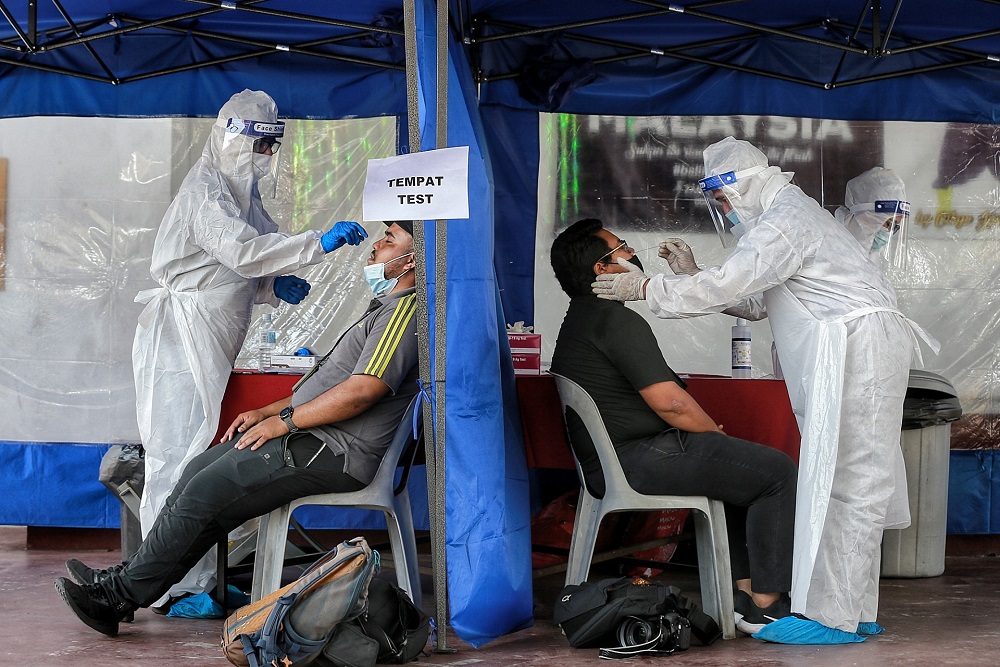
In accordance with the COVID-19 Management Guidelines implemented by the Ministry of Health Malaysia (MOH), the screening methods used to determine COVID-19-positive individuals are the Nasopharyngeal swab and the Oropharyngeal swab. The Nasopharyngeal swab method involves inserting a swab instrument into the individual's nasal cavity, reaching the nasopharyngeal region at a depth of approximately 4.8 cm for children and 8–12 cm for adults, in order to obtain a mucus sample. The Oropharyngeal swab method, meanwhile, involves inserting the swab instrument into the mouth as far as the oropharyngeal region — that is, the area behind the uvula — in order to obtain a mucus sample.
Having examined the relevant textual and juristic evidence on a comparative basis, the Perlis State Fatwa Committee has adopted the preponderant view (tarjih — the selection of the stronger opinion) that COVID-19 swab screening tests, as described above, do not invalidate the fast. Among the arguments and grounds relied upon in this matter are the following:
1. The swab test does not carry the meaning or characteristics of eating or drinking, which are the acts that invalidate the fast by scholarly consensus (ijma'). A fast that is certainly valid cannot therefore be deemed invalidated by something that is merely doubtful or speculative.
2. Treating the insertion of an object into al-Jauf (the internal body cavity) as, in itself, grounds for invalidating the fast has given rise to considerable divergence of opinion among the jurists of the various schools of law. The preponderant view — that the swab test does not invalidate the fast — accords with the position held by a number of Hanafi jurists, who stipulate that for something entering al-Jauf to invalidate the fast, it must remain lodged within the cavity and must not remain connected to something outside the body.
3. In further support of this position, the International Islamic Fiqh Academy (al-Majma' al-Fiqhi al-Islami), in its journal al-Majma' (10/453–455), has listed a number of medical procedures that do not invalidate the fast, including "the insertion of a gastroscope into the stomach without any accompanying fluid or similar substance."
If this is so, then it follows all the more that a swab test — which involves only the insertion of a swab instrument into the nasal cavity or mouth to obtain the required sample, followed by its withdrawal — likewise does not invalidate the fast.
Endorsed at the Meeting of the Perlis Islamic Religious and Malay Customs Council, No. 2/2020, held on 30 June 2020.