
Fatwa's Insights - Worship
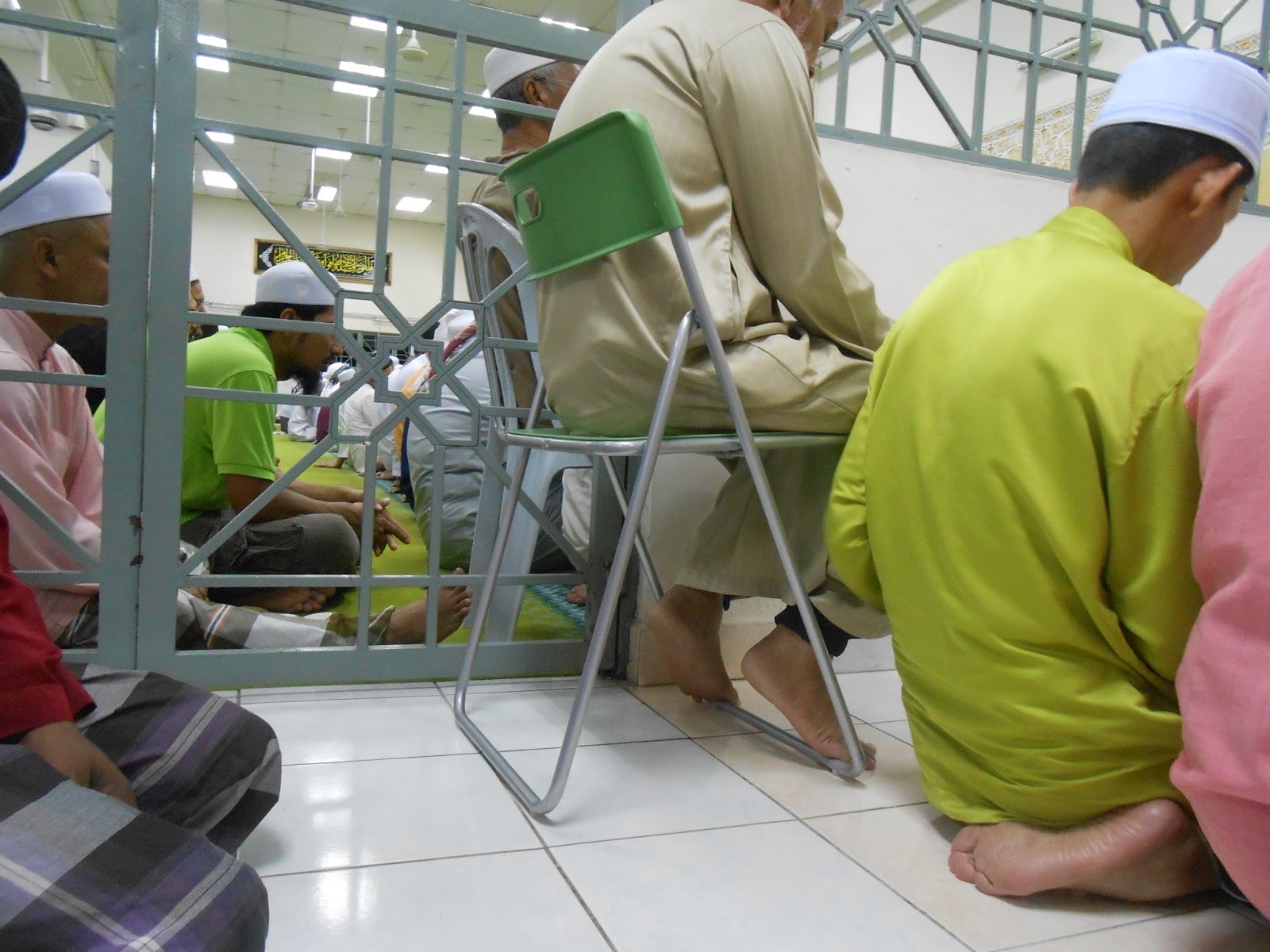
Ruling On Prayer Performed On A Chair
THE 44TH MEETING OF THE PERLIS STATE FATWA COMMITTEE / 2019
26 - 27 NOVEMBER 2019 / 29 - 30 RABIUL AWWAL 1441H
RULING ON PRAYER PERFORMED ON A CHAIR
Obligatory prayers (solat fardhu) must be performed while standing. However, for anyone who is unable to stand due to illness, old age, or similar conditions, it is permissible to pray while seated. The legal basis for prayer performed while seated is based on the hadith of Imran bin Husain RA who said:
كَانَتْ بِي بَوَاسِيرُ ، فَسَأَلْتُ النَّبِيَّ صَلَّى اللَّهُ عَلَيْهِ وَسَلَّمَ عَنِ الصَّلاَةِ ، فَقَالَ : صَلِّ قَائِمًا ، فَإِنْ لَمْ تَسْتَطِعْ فَقَاعِدًا ، فَإِنْ لَمْ تَسْتَطِعْ فَعَلَى جَنْبٍ
Translation: "I suffered from hemorrhoids, so I asked the Prophet SAW about prayer. He said: 'Pray while standing; if you are unable, then while sitting; if you are unable, then on your side'" (Narrated by al-Bukhari).
Therefore, every pillar of prayer must be performed according to its original prescribed form. If there is an difficulty in performing a particular pillar of prayer, but one possesses the ability to perform other pillars perfectly, such as a person who is unable to prostrate (sujud) in its original form but is able to stand for the takbiratul ihram and recite al-Fatihah, it is obligatory for him to stand to perform it.
Prayer is not valid if one abandons the original form of any pillar that one is capable of performing merely because one does not possess the ability to execute part of the original forms of other pillars.
For those who are unable to pray while standing, they may sit either in the iftirasy position or cross-legged or sitting on something such as a chair.
Below are several illustrations of the procedures for prayer on a chair based on differences in the level of impediment experienced:
1. UNABLE TO STAND, BOW, AND PROSTRATE IN THEIR ORIGINAL FORMS
a. Takbiratul ihram while seated on the chair.
b. Performing gestures for bowing and prostration also while seated on the chair. The position of prostration must be lower than bowing.
c. If able, both hands are placed on the floor during prostration.
2. ABLE TO STAND MOMENTARILY, ABLE TO BOW AND PROSTRATE IN THEIR ORIGINAL FORMS
a. Performing takbiratul ihram and reciting al-Fatihah while standing.
b. Standing when able and sitting on the chair when no longer able.
c. Bowing and prostration in their original forms.
3. ABLE TO STAND BUT IN A SWAYING CONDITION OR FEARED TO FALL
a. Performing takbiratul ihram while standing and continuing to stand to the extent that one is able, then sitting until the completion of the recitation of al-Fatihah and surah.
b. Bowing and standing upright (iktidal) in their original forms if able.
c. Prostration in its original form if able.
d. If unable to bow and prostrate in their original forms, then one may perform gestures for both these pillars. The prostration position is lower than bowing.
e. If experiencing difficulty in rising to the next rak'ah, then one may hold something such as a walking stick or hold onto the wall.
4. ABLE TO STAND BUT UNABLE TO BOW IN ITS ORIGINAL FORM
a. Performing takbiratul ihram and reciting al-Fatihah while standing.
b. Performing bowing according to ability by lowering the body slightly while standing.
c. Performing prostration in its original form if able. If unable, one may sit and perform prostration gesture on the chair.
5. ABLE TO STAND BUT UNABLE TO PROSTRATE IN ITS ORIGINAL FORM
a. Performing takbiratul ihram and reciting al-Fatihah while standing.
b. Performing bowing and standing upright in their original forms.
c. Performing prostration gesture lower than bowing while seated on the chair. If able, both hands are placed on the floor.
SEVERAL ADVISORIES RELATED TO PRAYER PERFORMED SITTING ON A CHAIR
Several advisories for anyone who wishes to perform prayer while seated on a chair, especially if performing congregational prayer at a mosque or prayer hall (surau):
1. If there is a choice of position, the chairs used by congregants who have impediments or are unable to stand should be at the end of the row.
2. The back legs of the chair must be aligned with the position of the feet of the congregant beside them.
3. The position of the feet of those who pray sitting on chairs shall not exceed the position of the imam.
4. The chair used shall be of a size not exceeding body size or necessity so that the uniformity of rows can be maintained and provides comfort for other congregants.
5. When a person prays while seated, the position of his back shall be aligned with the person praying beside him.
6. A person who sits on a chair but is able to stand shall position himself as close as possible to the row line to create alignment between rows.
7. Anyone who prays while seated may not pray while leaning back on the chair without any impediment.
Resolved at the Meeting of the Majlis Agama Islam dan Adat Istiadat Melayu Perlis No. 1 of 2020 convened on 10 January 2020.