
Fatwa's Insights - Worship
Fatwa On The Number Of Rak’ahs In Tarāwīḥ Prayer
THE 36TH MEETING OF THE PERLIS STATE FATWA COMMITTEE / 2018
8 - 9 MAC 2018 / 20 - 21 JAMADIL AKHIR 1439H
FATWA ON THE NUMBER OF RAK’AHS IN TARĀWĪḤ PRAYER
FATWA OF THE STATE OF PERLIS CONCERNING LEGAL ISSUES THAT ARE SUBJECT TO DISAGREEMENT AMONG THE PEOPLE OF PERLIS
The Fatwa Committee of Perlis acknowledges that in certain practices of Muslims, there exist Ijtihadiyyah (matters of independent juristic reasoning) issues that give rise to differences of opinion among scholars. Meanwhile, there also exist certain practices that are subject to misunderstanding. The following represents the views of the Fatwa Committee of Perlis as guidance in religious practice:
NUMBER OF RAK’AHS FOR TARAWIH PRAYER:
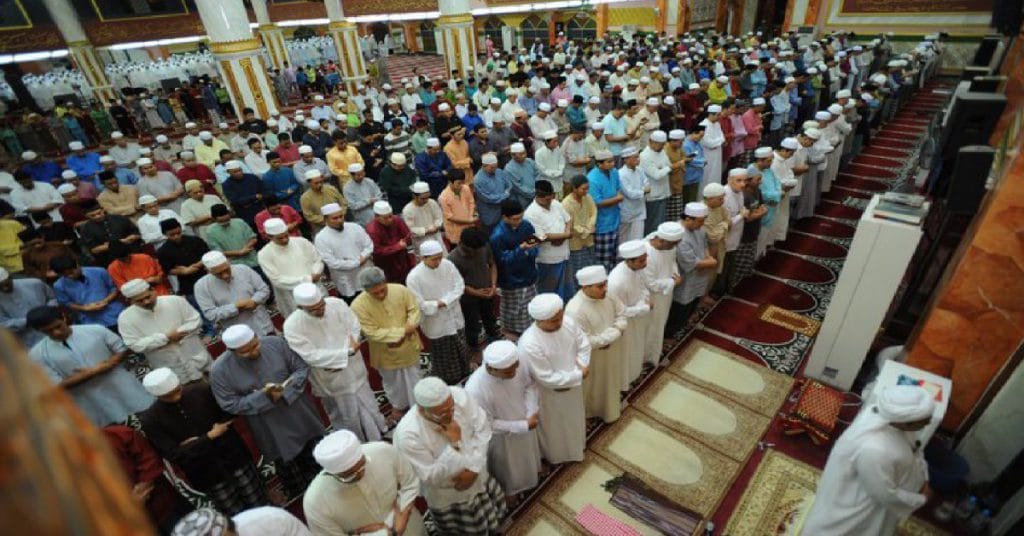
There is no specific stipulation regarding the number of rak’ahs for Tarawih prayer from the Prophet SAW. It is included among matters wherein flexibility is granted. What is more important in performing Tarawih prayer is maintaining proper etiquette and striving to attain khushu' (concentration and humility). It may be performed for 20 rak’ahs according to the Hanafi, al-Shafi'i and Ahmad schools of jurisprudence, or it may also be 36 rak’ahs according to the Maliki school, or 11 rak’ahs is also permissible. However, the hadith narrated from 'Aishah RA demonstrates that habitually the Prophet SAW performed the night prayer consisting of 11 rak’ahs. When asked by Abu Salamah bin Abdul Rahman about the Prophet's night prayer during the month of Ramadan, 'Aishah RA answered:
مَا كَانَ يَزِيدُ فِي رَمَضَانَ وَلاَ فِي غَيْرِهِ عَلَى إِحْدَى عَشْرَةَ رَكْعَةً
This hadith does not mean that the Night prayer was restricted to only eleven rak’ahs, because there are other narrations indicating that the Prophet SAW once performed the Night prayer with ‘Abdullāh ibn ‘Abbās as many as thirteen rak’ahs, as recorded by al-Imām al-Bukhārī and Muslim in their Ṣaḥīḥ collections. Likewise, there is the hadith:
أَنَّ رَجُلًا سَأَلَ رَسُولَ اللَّهِ صَلَّى اللَّهُ عَلَيْهِ وَسَلَّمَ عَنْ صَلَاةِ اللَّيْلِ فَقَالَ رَسُولُ اللَّهِ عَلَيْهِ السَّلَام صَلَاةُ اللَّيْلِ مَثْنَى مَثْنَى فَإِذَا خَشِيَ أَحَدُكُمْ الصُّبْحَ صَلَّى رَكْعَةً وَاحِدَةً تُوتِرُ لَهُ مَا قَدْ صَلَّى
Translation: “[A man once] asked the Messenger of Allāh SAW about the Night prayer, so the Messenger of Allāh SAW said: ‘The Night prayer is to be performed two rak’ahs at a time. If any of you fears the approach of dawn (al-Ṣubḥ), then let him pray one rak’ah as a witr following what he has prayed.’” (al-Bukhārī 946, Muslim 749)
The Prophet SAW did not specify a particular number of rak’ahs for the night prayer when asked about it. This constitutes clear evidence demonstrating that there is flexibility regarding the number of rak’ahs for the night prayer.
Therefore, the Imam is advised to perform Tarawih prayer according to the suitability of the congregation. The congregation is also encouraged to follow the Imam until the completion of the prayer in order to obtain the virtue mentioned in the hadith:
مَنْ قَامَ مَعَ الإِمَامِ حَتَّى يَنْصَرِفَ كُتِبَ لَهُ قِيَامُ لَيْلَةٍ
Translation: "Whoever performs prayer with the Imam until its completion, it will be recorded for him as the worship of a whole night.” (Narrated by al-Tirmizi 806 and he assessed it as Sahih Hadith. Abu Daud (1375), al-Nasa'i (1605) and Ibn Majah (1327). This hadith was also assessed as Sahih by al-Albani in Sahih al-Tirmizi)