THE 39TH MEETING OF THE PERLIS STATE FATWA COMMITTEE / 2019
1 MAC 2019 / 30 SAFAR & 1 RABIUL AWWAL 1440H
FATWA ON THE RULING OF ELOPEMENT MARRIAGE OR MARRIAGE ABROAD
Marriage that occurs between a couple outside the country involves several categories, namely:
1) A couple who are in a foreign country and face great difficulty in obtaining the permission of the original guardian to the extent that they are compelled to use a judicial guardian. Such a marriage is valid.
2) A couple who deliberately leave the country where they ought to have married.
For this second category, it involves two reasons:
i. Avoiding the bureaucracy of the local marriage administration authority
ii. Eloping from the guardian.
Regarding the first reason, if a couple leaves the country together with the guardian or after obtaining the guardian's permission, the marriage is undoubtedly valid. If the prospective wife is a widow, it is sufficient to obtain the guardian's consent. If she is a new convert, a judicial guardian may be utilized.
Regarding the second reason, if the woman is a virgin and her guardian refuses to act as her marriage guardian (adhl) without any reasonable cause, this marriage is also valid on the condition that she can prove the guardian's refusal to act as her marriage guardian. If the guardian's refusal cannot be proven and consummation has not yet occurred, her marriage is considered defective (fasid) and the marriage contract must be repeated with the guardian's permission. If there is offspring during that period, their lineage is established. If the guardian objects to the marriage because the couple is clearly not compatible (kufu') and this is agreed upon by the religious authorities, then the marriage is nullified.
Regarding marriages that occurred previously which have been believed by a couple to be valid, Allah forgives what has passed. The marriage contract need not be repeated while the lineage of their children is considered established.
The Perlis State Fatwa Committee advises the state religious authorities to facilitate marriage procedures by avoiding burdensome bureaucratic practices.
Approved at the Meeting of the Majlis Agama Islam dan Adat Istiadat Melayu Perlis No. 3 of 2019 convened on 22 April 2019.
THE 36TH MEETING OF THE PERLIS STATE FATWA COMMITTEE / 2018
8 - 9 MAC 2018 / 20 - 21 JAMADIL AKHIR 1439H
MARRIAGE PROCEDURES FOR MUSLIMS IN THE STATE OF PERLIS
1. Introduction
The management of marriage, divorce, and ruju' (Revocation of Divorce) for Muslims in the State of Perlis shall be conducted in accordance with Shari‘ah law. The Islamic Family Law Enactment 2006 of the State of Perlis (UUKI 2006) has established the regulations that must be adhered to in order to ensure that the management of marriage, divorce, and ruju' for Muslims is orderly and in accordance with Shari‘ah law. Therefore, the guidelines provided are intended to provide information to the Assistant Registrar regarding the procedures for managing marriage, divorce, and ruju' for Muslims in the State of Perlis. Nevertheless, in facilitating any marriage, the Assistant Registrar is bound by the Islamic Family Law Enactment 2006 of the State of Perlis (UUKI 2006) in administering the marriages of Muslims in this state.
Section 2. Interpretation
2.1 Residing means permanently or habitually dwelling in a specific area or as certified by the Syariah Judge accordingly (UUKI 2006).
2.2 The State Fatwa Committee of Perlis unanimously agrees that the meaning of the word "residing" in the Islamic Family Law Enactment 2006 of the State of Perlis (UUKI 2006) is that a person is in the State of Perlis for more than five (5) days.
2.3 This means that if a person can prove that he has been in the State of Perlis for a period exceeding that duration, he is considered “residing”.
3. Permission to Marry
3.1 Couples who wish to solemnize their marriage in the State of Perlis are required to obtain prior permission from the Perlis Islamic Affairs Department (JAIPs) through the Perlis Islamic Law Administration Division (PUS) JAIPs. Applications for permission can be obtained through the online system at the website www.sppim.gov.my. (APPENDIX A)
3.2 The requirements for completing the marriage permission form are:
a) marital status of the individuals intending to marry,
b) confirmation of residence (Village Imam / state religious authority),
c) Confirmation of Wali (guardian) and Marriage Course Certificate (JAIPs)
d) HIV test at a health office operated by the government. (APPENDIX B)
3.3 For couples facing issues of wali's (Guardians) refusal, absent wali, marriage of new converts, polygamy and underage marriage, the application must be made through the Syariah Court of the State of Perlis. (APPENDIX C)
3.4 The completed form must be submitted to the PUS Division of JAIPs, and approval may be granted within 3 working days. (APPENDIX D)
4. Wali (Guardian)
Before the akad (solemnization) is conducted, the Assistant Registrar first asks the wali whether the wali himself will perform the marriage akad or delegate it to the Assistant Registrar. If the wali cannot be present during the akad, the wali must make wakalah before the marriage akad is conducted. The wali's wakalah may be executed by way of:
4.1 Meeting directly with the Assistant Registrar before the marriage solemnization is conducted by completing the wakalah form provided, or
4.2 In writing / sending the wakalah form for those who are unable to meet directly, or
4.3 Through telephone call. However, this method requires scrutiny / verification to ensure that there is no element of fraud. (APPENDIX E)
5. Dowry
5.1 There is no stipulation of a specific amount for dowry. It depends on mutual agreement.
5.2 The Syariah Law Administration Division (PUS) does not encourage dowry that cannot be clearly valued such as teaching Surah al-Fatihah or Surah al-Ikhlas by the bridegroom to the bride. The couple is also required to specify an amount to facilitate the administration of marriage matters in the future.
6. Ijab and Qabul (Offer and Acceptance)
6.1 The time interval between ijab and qabul is not determined; it is sufficient that it is understood that the qabul that is made is within the same assembly.
6.2 It is not a condition that qabul must be uttered in one breath.
6.3 It is not a condition to shake hands during the marriage solemnization, nor is shaking the hands while in handshake. However, if there are those who choose to shake hands to demonstrate agreement and acceptance, it is permissible.
6.4 Witnesses to the marriage solemnization must be from among those who understand the marriage contract and understand the conditions of ijab and qabul.
6.5 Repetition of the solemnization is not required unless there is clearly an error or mistake.
6.6 The Assistant Registrar must facilitate the solemnization proceedings and safeguard the dignity of the bride and groom. The marriage solemnization ceremony is not a platform for testing or interviewing the couple with questions pertaining to religious rulings.
6.7 The Assistant Registrar need not request that the couple recite istighfar and pronounce The Declaration of Faith (syahadah) publicly. Indeed, it is obligatory to believe that if the couple are Muslims, then they are Muslims. There is no need to doubt their faith. Nor should they be required to seek forgiveness for public demonstration.
6.8 The Pronouncement of Ijab may be pronounced as follows:
6.8.1 Wali Himself:
"(Name of groom), I marry you to ...... (state relationship with bride and name of bride) with a dowry of RM ............... cash/debt."
6.8.2 Wakil Wali:
"(Name of groom), I marry you to ...... (name of bride) whose wali has delegated authority to me, with a dowry of RM ........ cash/debt."
6.8.3 Wali Hakim:
"I marry you to ...... (name of bride) with a dowry of RM ........ cash/debt."
6.9 The Pronouncement of Qabul may be pronounced in one of the following ways:
6.9.1 "I accept the marriage of ..... (name of bride) with a dowry of RM ..... cash/debt."
6.9.2 "I accept the marriage of ..... (name of bride) with the aforementioned dowry."
6.9.3 I accept the marriage as stated / mentioned.
7. Marriage Sermon
7.1 The marriage sermon used by the Assistant Registrar is the sermon provided by the Syariah Law Administration Division (PUS) JAIPs published by the Malaysian Department of Islamic Development (JAKIM) or the Perlis State Mufti Department.
7.2 The guide text of the said sermon contains three (3) specific sermon texts for General Marriage, Marriage of New Converts and Polygamous Marriage. The text of the marriage sermon is also provided in the English language. This marriage sermon book published by JAKIM also includes prayers after the marriage solemnization. (APPENDIX F, G, H & I)
8. Ta’liq (Conditional Divorce Vow)
8.1 The practice of ta'liq is not practiced in the State of Perlis.
8.2 However, for a wife who wishes to make an application for ta'liq, she must obtain the consent of her spouse / husband and complete the form determined by the Syariah Law Administration Division (PUS) JAIPs. Both parties must understand and agree with the implications of the ta'liq to be made. (FORM ...)
9. Service Fees
9.1 Marriage Application Form – Free of Charge
9.2 Pre-Marriage Course Integrated Islamic Family Marriage Module (MBPKI) – RM 90.00
9.3 HIV Test – RM 1.00 (Public) Free of Charge (Government Employees)
9.4 Marriage Permission – RM 5.00
9.5 Assistant Marriage Registrar Fee – RM 85.00
9.6 Witnesses Fee (2 Persons) – RM 50.00
9.7 Marriage Registration Fee – RM 15.00
9.8 Marriage Card Fee – RM 50.00
Approved and Resolved at the Meeting of the Majlis Agama Islam dan Adat Istiadat Melayu Perlis (MAIPs) No. 5 of 2018.
THE 34TH MEETING OF THE PERLIS STATE FATWA COMMITTEE / 2018
6 JANUARI 2018 / 18 RABIUL AKHIR 1439H
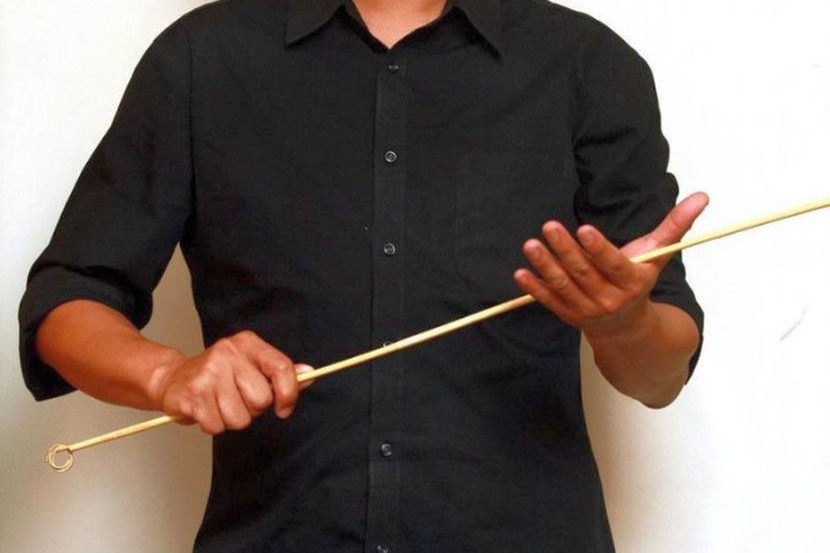
THE RULING ON INFLICTING HARM ON A SPOUSE, CHILD, OR STUDENT FOR EDUCATIONAL PURPOSES
1) Inflicting physical or psychological harm on a spouse, child, or student in any form in an unjust manner, even for the purpose of education, is prohibited.
2) Permission to strike for educational purposes is only allowed on the condition that it does not cause harm to the physical or psychological well-being of the person being educated. The Prophet (Peace Be Upon Him) said:
Meaning: "Command your children to perform prayer when they are seven years old, and strike (discipline) them for it when they are ten years old and separate their sleeping places (between boys and girls)." (Narrated by Abu Dawud. Authenticated as Sahih by al-Albani in Sahih Abi Dawud)
3) Striking, slapping, or any harsh action upon the face is absolutely prohibited based on the hadith of the Prophet (Peace Be Upon Him), even if done for the purpose of discipline or in jest. He said:
THE 18TH MEETING OF THE PERLIS STATE FATWA COMMITTEE / 2015 22 - 23 APRIL 2015 / 3 - 4 REJAB 1436H
CUSTODY RIGHTS OF CHILDREN FOR PARENTS OF DIFFERENT RELIGIONS
For non-Muslim couples where one of them embraces Islam, the right of custody is not assessed based on the religion of the mother or father. Instead, it is entrusted to whoever is better able to guarantee the welfare of the child from the perspective of moral development, emotional wellbeing and upbringing (syafaqah). At the same time, the Muslim mother or father bears the responsibility of introducing Islam to the child. The details are as follows:
1. Children Under Breastfeeding Period: • If the child is still under the mother's bodily breastfeeding, then the right of custody is entrusted to the mother. • If the child is not breastfed by the mother, then the right of custody is entrusted to whoever is better able to provide syafaqah, which may be referred to the background of both parties and the child's choice.
2. Children Beyond Breastfeeding Period: • If the child has passed the breastfeeding period but is not yet mumayyiz, then the right of custody is entrusted to whoever is better able to provide syafaqah, which may be referred to the background of both parties. • If the child has reached mumayyiz, then he has the right to make his choice, unless it can be proven that his choice will bring harm to his worldly life.
3. Responsibility of Introducing Islam: The Muslim mother or father is obligated and has the right to introduce Islam to their child even though he or she does not obtain the right of custody. Thus, the opportunity to introduce Islam to the child must be given to him or her.
Endorsed at the Meeting of the Council of Islamic Religion and Malay Customs of Perlis No. 3/2015 held on 26 April 2015.